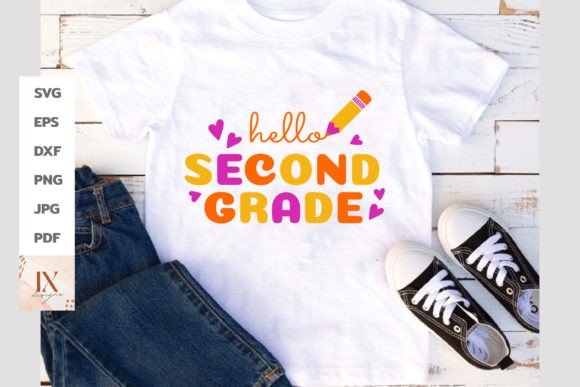
Second Grade SVG, Hello Back to School: A Versatile Resource for Educators and Parents
Second Grade SVG, Hello Back to School is a digital design resource that offers a range of file formats, including SVG, PNG, DXF, EPS, PDF, and JPG. This collection is particularly useful for educators, parents, and homeschoolers looking for creative tools to support learning and classroom activities. The variety of file types ensures flexibility in use across different platforms and applications.
What Makes Second Grade SVG, Hello Back to School Unique?
The appeal of Second Grade SVG, Hello Back to School lies in its accessibility and adaptability. Each file format serves a specific purpose, allowing users to choose the most suitable option based on their needs. For example, SVG files are ideal for scalable graphics that maintain quality at any size, making them perfect for digital presentations or printable materials. PNGs offer high-quality images with transparent backgrounds, which can be useful for overlays or web design. DXF and EPS files are commonly used in professional design and manufacturing, while PDFs ensure consistent formatting across devices. JPGs provide a compact format for quick sharing and viewing.
This comprehensive set of files makes Second Grade SVG, Hello Back to School a practical choice for those who need multiple formats for different projects. Whether you're creating lesson plans, designing classroom decorations, or preparing digital content, the resource offers a foundation that can be easily customized and integrated into various workflows.
Comparing Second Grade SVG, Hello Back to School with Other Options
When evaluating digital design resources, it's important to consider how Second Grade SVG, Hello Back to School stacks up against similar options. Many educational tools focus on a single file type, such as PDFs or PNGs, which may limit their usefulness in certain contexts. By offering multiple formats, this resource provides greater versatility, especially for users who work across different software environments or need specific file types for particular tasks.
For instance, if you're using graphic design software like Adobe Illustrator or Inkscape, having access to SVG and EPS files can streamline your workflow. If you're preparing materials for online use, PNGs and JPGs may be more practical for web-based sharing. The inclusion of DXF files also makes this resource valuable for those interested in 3D modeling or laser cutting, expanding its potential applications beyond traditional classroom settings.
However, it's worth noting that not all users will require all the file types included in the ZIP file. For those who only need one or two formats, other resources may offer more streamlined options. The decision ultimately depends on the user's specific needs and the extent to which they plan to utilize the files.
Strengths and Tradeoffs of Second Grade SVG, Hello Back to School
One of the main strengths of Second Grade SVG, Hello Back to School is its ability to support a wide range of creative and educational uses. The availability of scalable vector graphics (SVG) means that users can resize elements without losing quality, which is essential for teaching materials that may need to be printed in different sizes. This feature is particularly beneficial for teachers who want to create visual aids that can be adapted for different grade levels or classroom setups.
Another advantage is the ease of customization. With access to vector files, users can modify colors, shapes, and text to match their specific requirements. This level of flexibility is not always possible with raster-based formats like PNG or JPG, which can become pixelated when scaled up. Additionally, the inclusion of EPS and DXF files opens up opportunities for more advanced design and production processes, making this resource suitable for both casual and professional use.
On the other hand, the diversity of file types may also present some challenges. Managing multiple formats can be time-consuming, especially for users who are not familiar with the differences between them. Some individuals may find it overwhelming to decide which file type is best suited for their project. Furthermore, the quality of the original design can impact the effectiveness of the resource. If the source files are not well-crafted, even the most versatile formats may not deliver the desired results.
Best Fit Situations for Second Grade SVG, Hello Back to School
Second Grade SVG, Hello Back to School is most effective in scenarios where flexibility and scalability are important. Teachers and educators who frequently update their lesson plans or create new materials may find the resource invaluable. The ability to adjust designs quickly and easily can save time and effort, especially when working on projects that require frequent revisions.
Parents and homeschoolers who are looking for engaging, interactive learning tools may also benefit from this resource. The variety of file formats allows for creative expression, whether through digital displays, printed worksheets, or hands-on activities. For example, a parent could use the SVG files to create custom flashcards or printable games that reinforce key concepts in a fun and interactive way.
Additionally, individuals involved in graphic design, craft projects, or small-scale manufacturing may find the resource useful for prototyping or producing physical items. The inclusion of DXF and EPS files supports more complex design workflows, making it a valuable tool for those who want to explore different creative avenues.
Limitations and When to Consider Alternatives
While Second Grade SVG, Hello Back to School offers many benefits, it may not be the best choice for every situation. Users who only need a single file type, such as a PDF for printing or a JPG for social media, may find the additional formats unnecessary. In these cases, simpler resources that focus on a specific format could be more efficient and cost-effective.
Moreover, the effectiveness of the resource depends on the quality of the original design. If the files are poorly constructed or lack clarity, even the most versatile formats may not meet the user's expectations. It's important to review the files carefully before committing to their use, especially if they will be shared with others or used in a professional setting.
For those who require more specialized tools or higher-resolution images, alternative resources may offer better value. For example, premium design platforms often provide more detailed and customizable assets, while open-source communities may offer free alternatives with similar functionality. Exploring these options can help users make a more informed decision based on their specific needs and goals.
Practical Examples and Use Cases
Consider a teacher who wants to create a back-to-school themed bulletin board. Using the SVG files, they can design a large, scalable image that fits the space perfectly. The PNG files can then be used for smaller, detailed elements like student names or classroom rules. The PDF version ensures that the final layout remains consistent when printed, while the JPG files can be shared digitally with students or parents.
Another example involves a parent who is planning a homeschooling curriculum. They could use the SVG files to create interactive flashcards, the EPS files for high-quality printouts, and the DXF files for a DIY project that reinforces math or geometry concepts. The flexibility of the resource allows for a personalized approach to learning, tailored to the child's interests and abilities.
For a designer looking to create a series of back-to-school-themed products, the availability of multiple file types streamlines the process. The SVG files can be used for digital marketing, the DXF files for manufacturing, and the JPG files for social media posts. This multi-format approach ensures that the designs can be effectively utilized across different channels and platforms.